Marriage Muhurta 2026: How Families Choose the Date, and the Best Windows
How shubh muhurta for weddings is actually calculated — lagna, tithi, moon, nakshatra — plus the most auspicious marriage windows of 2026.
Every wedding season, my phone fills with the same anxious question: "We have twelve possible dates from the hall — which one does the panchang like?" Choosing a marriage muhurta is not superstition theatre; it is the quiet art of beginning a long project at a moment when the sky cooperates. Here is how it actually works.
The Four Filters Every Muhurta Passes
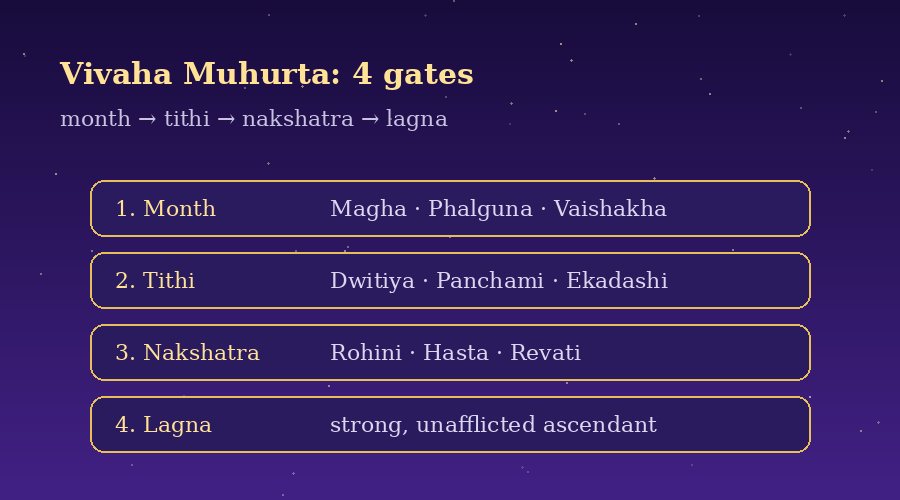
A classical vivaha muhurta must clear four gates, in order:
- The month and paksha. Weddings avoid lunar months like Ashadha and the intercalary Adhika masa, and traditionally favour bright paksha. Certain months — Magha, Phalguna, Vaishakha, Jyeshtha, Margaśīrṣa — are classics across most regions.
- The tithi. Favourable wedding tithis: Dwitiya, Tritiya, Panchami, Saptami, Ekadashi, Trayodashi. Amavasya and Purnima are avoided, as are the heavy tithis like Chaturthi in many regions.
- The nakshatra. Rohini, Mrigashira, Magha, Uttara Phalguni, Hasta, Swati, Anuradha, Mula, Uttara Ashadha, Shravana, Uttara Bhadrapada, Revati — the classical wedding constellations.
- The weekday and lagna. Thursday, Friday and Wednesday are the favourites (Jupiter, Venus, Mercury). Then the electional ascendant — the lagna rising at the ceremony time — must be strong, unafflicted by malefics, and compatible with both charts.
A date that fails any gate is out, no matter how good the banquet hall's discount is.
What Makes 2026 Special
2026 carries a favourable planetary backdrop for weddings: Jupiter moves through Cancer — its sign of exaltation — for much of the year, blessing the classic "Guru in strength" criterion that electional astrologers pray for. Saturn in Pisces forms a productive sextile to the Jupiter position, and the eclipse seasons (spring and late summer) carve out the windows to avoid.
The standout marriage windows of 2026 fall in the traditional post-Makar Sankranta season and the autumn Shubh period — your family's panchang and our live calendar will pin the exact days, since a muhurta is always regional: the same date can be excellent in Delhi and average in Chennai.
The Step Most Families Skip
Here is the honest secret of good muhurta work: the universal "best date" is a myth. The final filter personalizes the election to the couple — the lagna of the muhurta should reinforce the 7th house lords of both charts, and the Moon of the muhurta day should be friendly to both Moons. Two families can receive different recommendations for the same city and season. That last step is where a scholar earns the fee.
But the first three filters — month, tithi, nakshatra, weekday — are public knowledge, printed in every panchang, and anyone can shortlist dates with them.
Regional Wisdom: North, South, and the Borderlands
A muhurta scholar must hold two truths at once: the shastra is pan-Indian, and its calendar is stubbornly local. Some examples families discover the hard way:
- Ashadha month is avoided for North Indian weddings almost universally, while certain South Indian communities find auspicious days within it — regional panchang tradition, not contradiction.
- Aadhika masa (the intercalary month) is broadly avoided for vivaha, yet it is considered excellent for shraddha and specific deity worship — the calendar's "pause month" has its own appointments.
- Solar ingress days (Sankranti) carry a technical flaw called shunya tithi at their junctions in many regions — a wedding timed at the exact ingress minute can inherit the flaw even on an otherwise fine day.
- Gujarat and the west hold certain Ekadashis as vivaha-favourable that the eastern panchangs avoid — when families from two regions marry, the scholar arbitrates with the stricter tradition, and everyone sleeps well.
The practical rule: when two panchangs disagree, the couple's family tradition wins, then the stricter rule, then the weekday. A muhurta that pleases both sets of grandparents is itself a shubh sign.
Shortlist Your Dates — Free
Our live Panchang & Muhurta calendar shows today's tithi, nakshatra and weekday for your city — apply the four filters above, and take your shortlist to your family panchang for the final lagna check.
Frequently Asked Questions
Is an "unlucky" wedding date really dangerous?
The tradition treats it as starting under a headwind — not a curse. Millions of happily married couples married on indifferent dates; the muhurta is a tailwind, not a life sentence.
What if the hall only has dates that fail the filters?
Compromise intelligently: prioritize tithi and weekday, then the ceremony lagna, which a scholar can sometimes strengthen by shifting the muhurat time within the day.
Do North and South India use the same rules?
Broadly yes with regional variations — some months favoured in the North are avoided in the South and vice versa. Regional panchang tradition wins.