The Three-Card Spread: The Only Tarot Layout Most People Ever Need
Past-present-future is just the beginning. How to read a three-card spread with confidence, sample readings, and the mistakes beginners make.
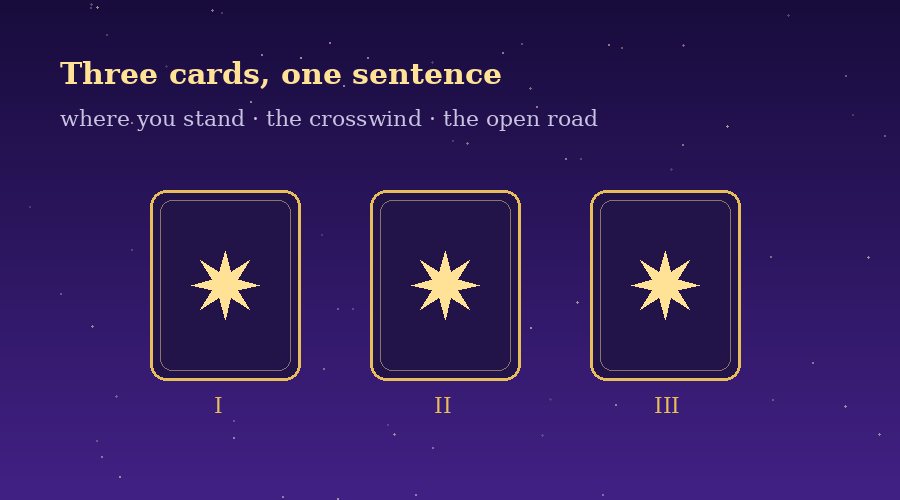
When someone sits across my table for the first time, I don't reach for the Celtic Cross — a ten-card spread that reads like a novel when they asked for a sentence. I lay down three cards. Three cards, honestly read, answer almost every real question. Here is the layout I teach first.
The Classic Positions
Card 1 — Where you stand. Not necessarily "the past" — more precisely, the ground under your feet: the situation as it actually is, including what you refuse to see.
Card 2 — The crosswind. The energy moving through now — the obstacle, the opportunity, or the feeling you keep circling. This is the pivot card; watch it hardest.
Card 3 — The open road. Where the current path leads. Not fixed fate — the trajectory if nothing changes. The most empowering card, because it is the one you can edit.
Reading Them as One Sentence
The skill that separates reading from reciting: synthesize. A spread is not three definitions — it is one sentence in three clauses.
- Example: Eight of Swords · The Star · Six of Wands.
Read alone: feeling trapped · hope · victory. Read together: "You are caged mostly by your own narrative — hope is already available — and visible confidence follows." - Example: Tower · Queen of Cups · Two of Pentacles.
Together: "The collapse already happened; your work now is emotional honesty, then patient re-balancing."
Variations Worth Learning
- Mind · Body · Spirit — for wellness questions
- You · The Other · The Bridge — for relationship questions; the third card is the honest summary of the dynamic
- Option A · Option B · The Cost of Indecision — for the questions that keep you up at night
The Five Mistakes Beginners Make
- Memorizing instead of looking. The picture matters more than the book meaning — describe what you SEE first.
- Dodging "bad" cards. The Tower and Death are transformations. A reading without them is often a reading about stagnation.
- Re-drawing until pleased. The first draw is the honest one; re-shuffling for comfort is asking the mirror to flatter.
- Reading for others too soon. Thirty days of daily self-readings first — pattern recognition needs reps.
- Treating card 3 as a verdict. It is a trajectory. The whole point of seeing it is that you can steer.
Frequently Asked Questions
Do I need a question before shuffling?
A rough one helps — "what do I need to see about X?" Open questions beat yes/no.
Reversed cards — read them?
Optional. I read reversals as the card's internal or blocked expression; ignore them for your first hundred readings.
How often should I read?
Daily one-card for a month; three-card weekly; deep spreads only when a real decision demands it.
Start today: pull your card of the day free — one card, one clear thought, every morning.